
Data Sharing Agreements and governed data self-service
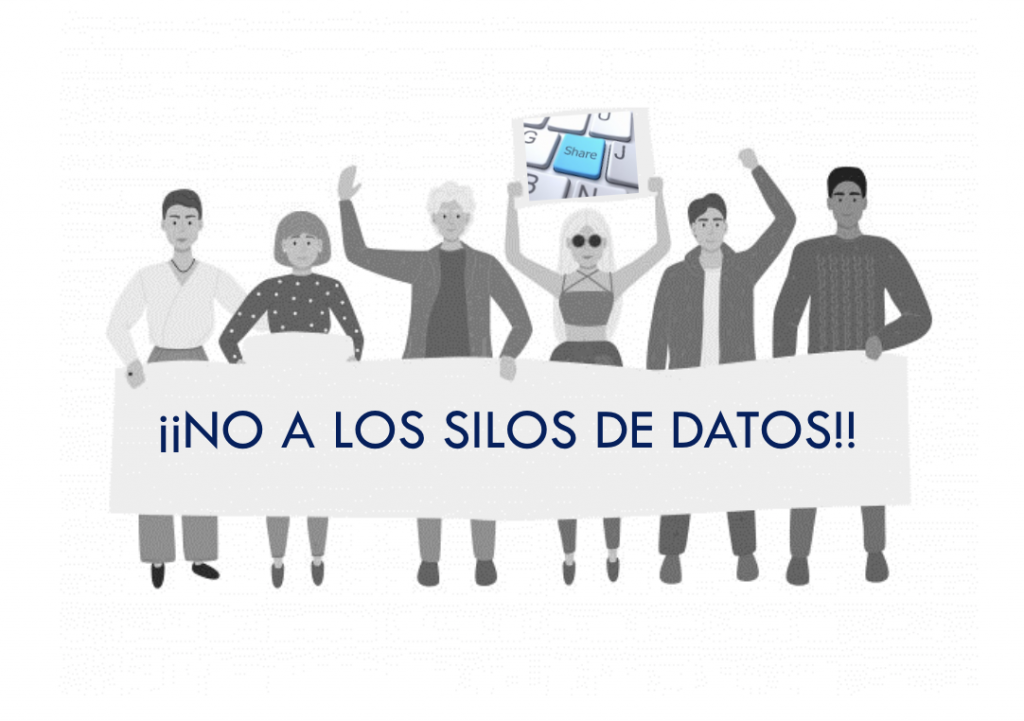
Unlike many other assets, data has the essential characteristic that its value increases the more and the better it is shared. That is why sharing data is vital for an organisation to become data-driven. However, establishing the mechanisms to do so in a secure, governed, effective and efficient manner is one of the greatest challenges of a data governance programme.
In this context, we come from a world where data was organised in silos guarded by pure IT teams (Systems, DBAs, etc.) and served in the form of reports, metrics or fully cooked projects with long development times. Today, this is completely obsolete and is already being broken down in many organisations.
For years now, we have been experiencing a technological revolution that brings new capabilities in data processing (Big Data, Cloud, IoT, Advanced Analytics, AI & ML, etc.). We have a greater data culture among individuals and organisations, and there is more training in data matters., data literacy y data storytelling, new skills are acquired to consume data and generate insights in business areas thanks to more and better analysts and data scientists, ... so it is clear that data is no longer something that can be guarded by pure IT teams and served up over long development times, but rather something that must be put at the service of the business (people or algorithms) for quick and effective decision-making that generates a competitive advantage.
What are the benefits of sharing data within an organisation or between organisations?
- Maximise synergies between different stakeholders to improve their daily operations. We can see this in the environment of a single organisation where different departments have to share information in order to carry out their daily tasks and activities or make certain decisions. Another very clear example is in research and innovation, which is why there are many projects involving Open Data worldwide focused on sharing open data (the latest and largest of which is the European Union
- Furthermore, cSharing this data improves the quality of key data. to make better decisions more quickly. If data is made available to other consumers, producers will place greater emphasis on sharing quality data that facilitates faster decision-making.
- Reuse developments and work already carried out, increasing the efficiency of data projects. In this way, we will ensure that each data initiative that requires the development of processes or preliminary analysis work does not have to start from scratch and can reuse the work already carried out in frameworks common or collaborative models.
- Savings in operating costs and improved productivity for professionals. Sharing data also leads to savings in operating costs because it prevents data duplication for certain activities or overlapping manual data management tasks (searching, understanding, requesting, cleaning, etc.), which results in improved productivity for the organisation's professionals.
- In turn, it also aims to improve the time-to-market and time-to-value of new products and services of any kind. Today, most of the products or services launched on the market, both by public administrations and private organisations, depend largely on analyses based on historical data or future predictions. We are all familiar with the highly successful case of the recommendation algorithm used by Netflix
- Assisting data scientists in developing better advanced analytics models, providing them with better, more comprehensive raw material (more data and of higher quality) on the one hand, and on the other hand, preventing them from investing a great deal of their time in searching for, understanding, requesting, enriching and cleaning data, so that they can devote it to tasks where they really add value, which is the construction of models (https://www.datanami.com/2020/07/06/data-prep-still-dominates-data-scientists-time-survey-finds/)
- Contribute transparency y confidence both the data and the processes of capturing, storing, transforming and consuming data and information. If we share, it is clear that we have nothing to hide, and this is key, especially for 21st-century public administration. Estonia is one of the most notable examples of this: https://www.tallinn.ee/eng/Uudis-Regions-and-Cities-contribute-the-most-of-open-data-in-Estonia-Tallinn-is-the-top-publisher-overall.
Once we are clear about the benefits of sharing data, this leads us to a dilemma between two sides: on the one hand, we must promote the use and reuse of data, and to do so we must democratise access to it; on the other hand, we must have control over how that data is used to ensure regulatory compliance and data security. In the end, there is always that turning point that makes us reflect on the different paths that data sharing entails.
“Aurea mediocritas: Virtue lies in the middle ground” – Aristotle
That is the middle ground that is achieved with the entry into play of the Data Sharing Agreements (DSAs) to share data in an environment where we feel comfortable and there is governance. In this sense, we must always seek a balance between adding value to the business and complying with regulations; following what the business needs, but at the same time not incurring high technological costs; promoting self-service, but maintaining control over the information that is being made available to others; and then also pursuing innovative and disruptive solutions without forgetting that the traditional cannot disappear overnight.
Data is a strategic asset, but it has different perspectives.
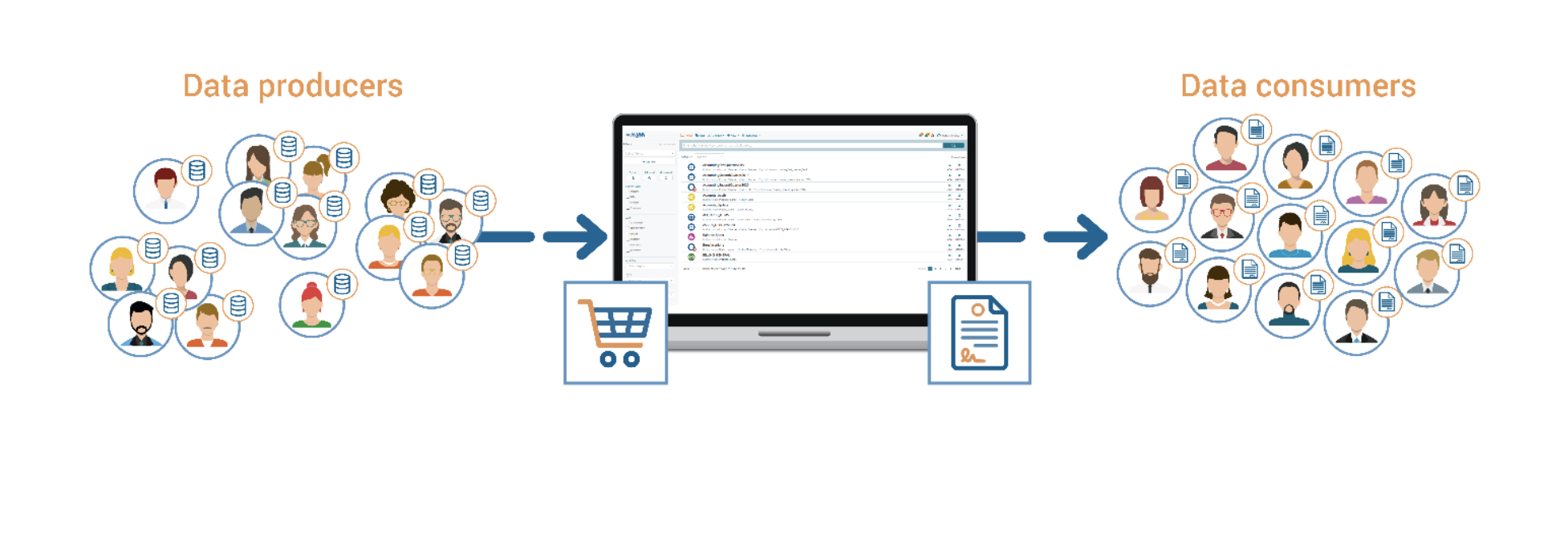
Whenever we talk about data sharing, what we mean is making information available from producers for use by consumers, and in that process there are also roles that have to ensure that everything works correctly. Ultimately, each person or type of role will have their own profile, views and needs; and thanks to DSAs we will be able to cover all of them.
From the perspective of a data consumer, they need access to data knowledge thanks to its context and meaning; a guarantee of the quality of the data used for decision-making; compliance with SLAs by producers; and regulatory compliance from the point of view of use.
From a producer's point of view, they seek to control the processes of production and availability of their data, prepare and certify the data they are going to share, know which processes and which people are using the data and for what purpose, and comply with data regulations and standards.
From a cross-functional management and oversight perspective, the objectives will be to maximise the ROI of data initiatives, increase process productivity efficiency, automate and reduce operational costs and risks, achieve a consistent view of information consumption, and ensure regulatory compliance.
But what exactly is a Data Sharing Agreement?
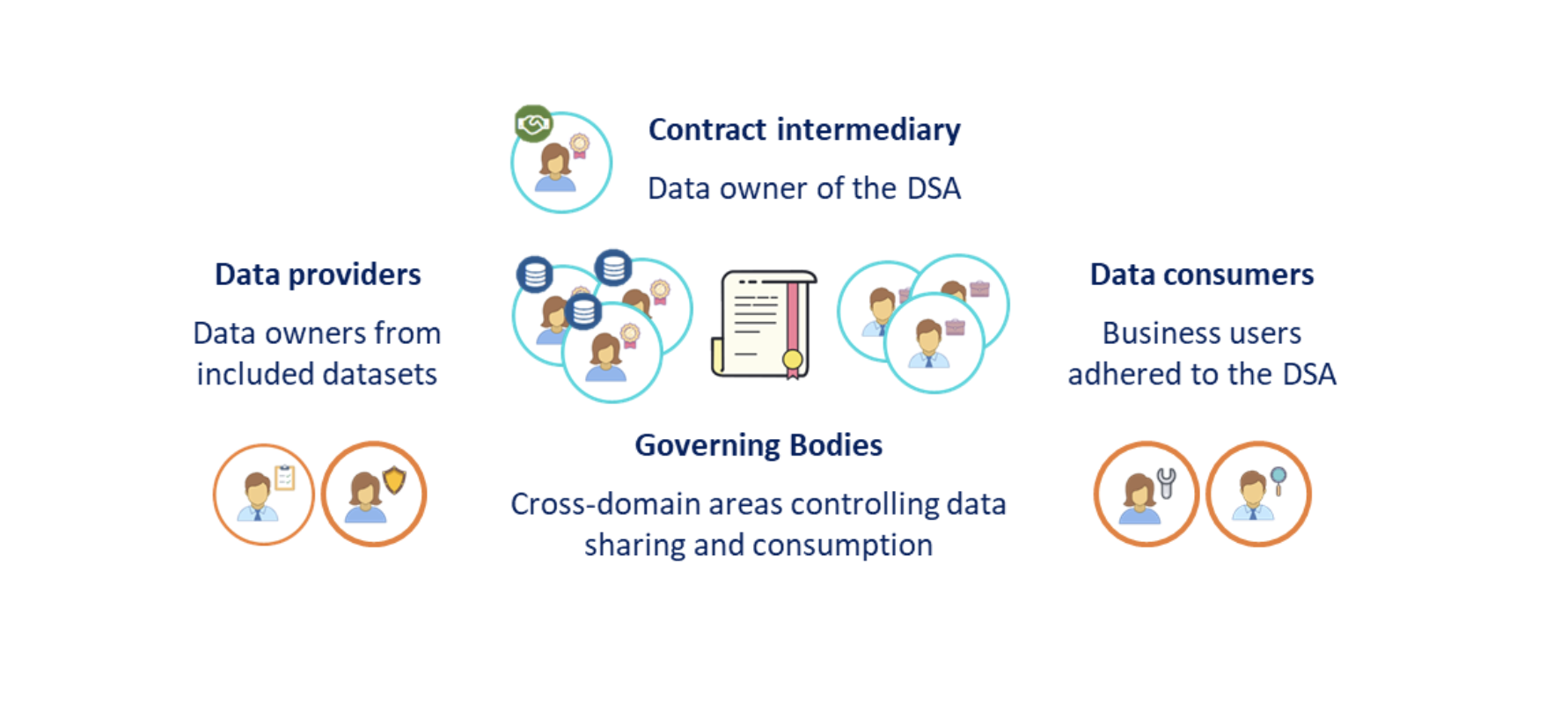 One DSA It is essentially a mechanism for sharing data between producers and consumers in an agile and personalised way, facilitating regulatory and normative compliance in the use of data. Furthermore, thanks to the DSAs We can standardise the way in which access to data and information is requested, granted and managed, thereby increasing efficiency and productivity.
On the other hand, the DSAs are represented as logical assets that group together different technical data assets or Data sets (tables, files, views, documents, events, etc.) offering stakeholders a new experience of sharing information by facilitating all the technical complexity underlying this ‘data sharing’ as they contain all the metadata information of the technical assets they encompass. Thus, the DSAs They bring the data closer to the business consumer, abstracting it from all the underlying technical concepts.
Finally, the DSAs They also enable the definition, implementation and operationalisation of Data Contracts in order to provide the necessary flexibility to implement the different data access policies that are desired for each particular case of information sharing, since sharing public data from three years ago is not the same as sharing citizens' home addresses or confidential data on an organisation's strategy. Sometimes a Data Contract can serve multiple purposes and multiple consumers, but other times specific Data Contracts are needed for very specific cases.
And how can I incorporate DSAs into an organisation?
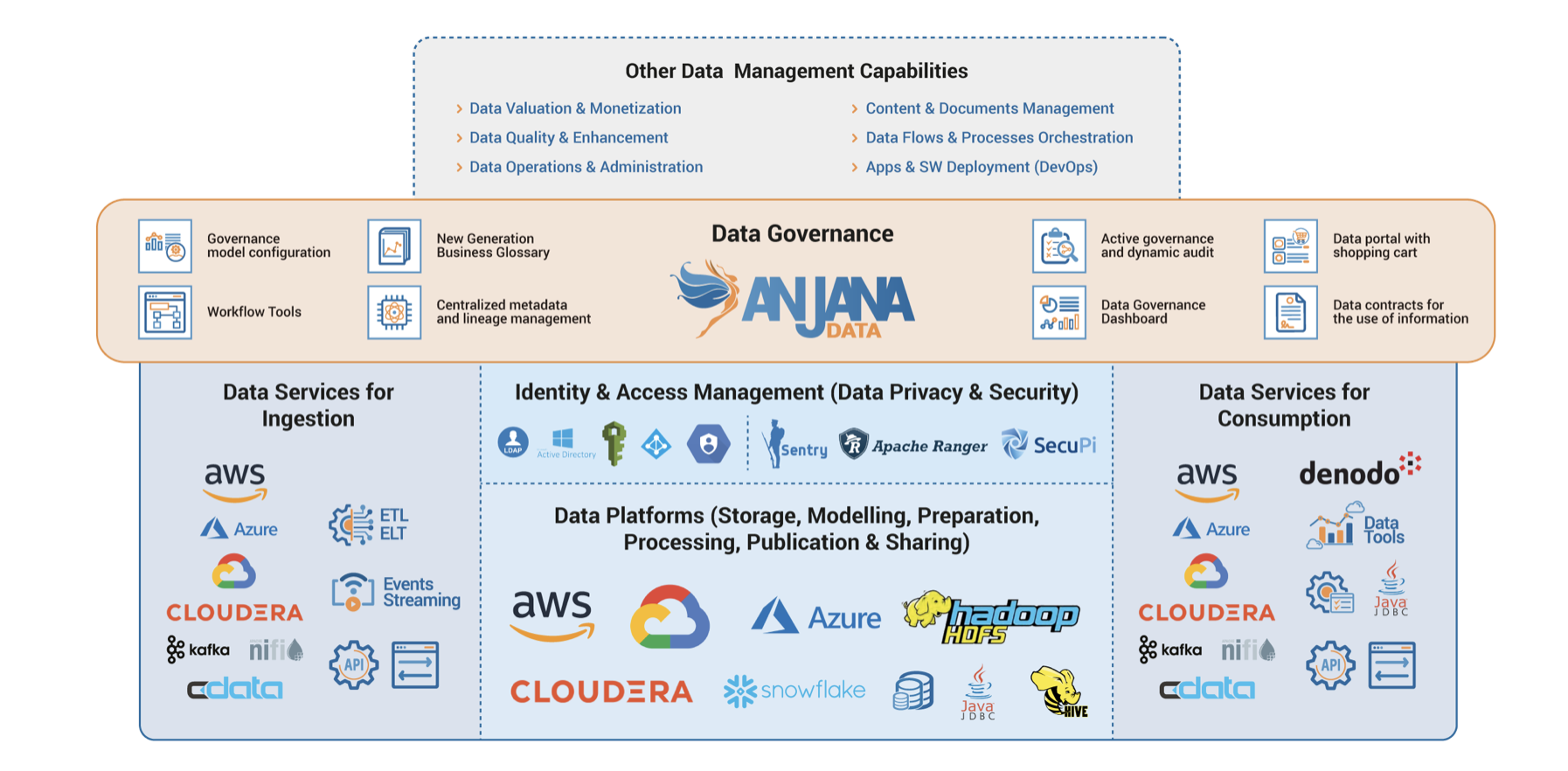
Incorporate innovative elements into data governance such as DSAs It is not an easy task, but if you are truly interested and want to do it, it is best to have the right people, the correct processes, and the necessary technology. If you want to know more about how to operationalise the DSAs, different use cases and success stories, take a look at this document, to this webinar or get in touch with us.