

Discover the four types of strategies for implementing a data governance model by playing Catan.
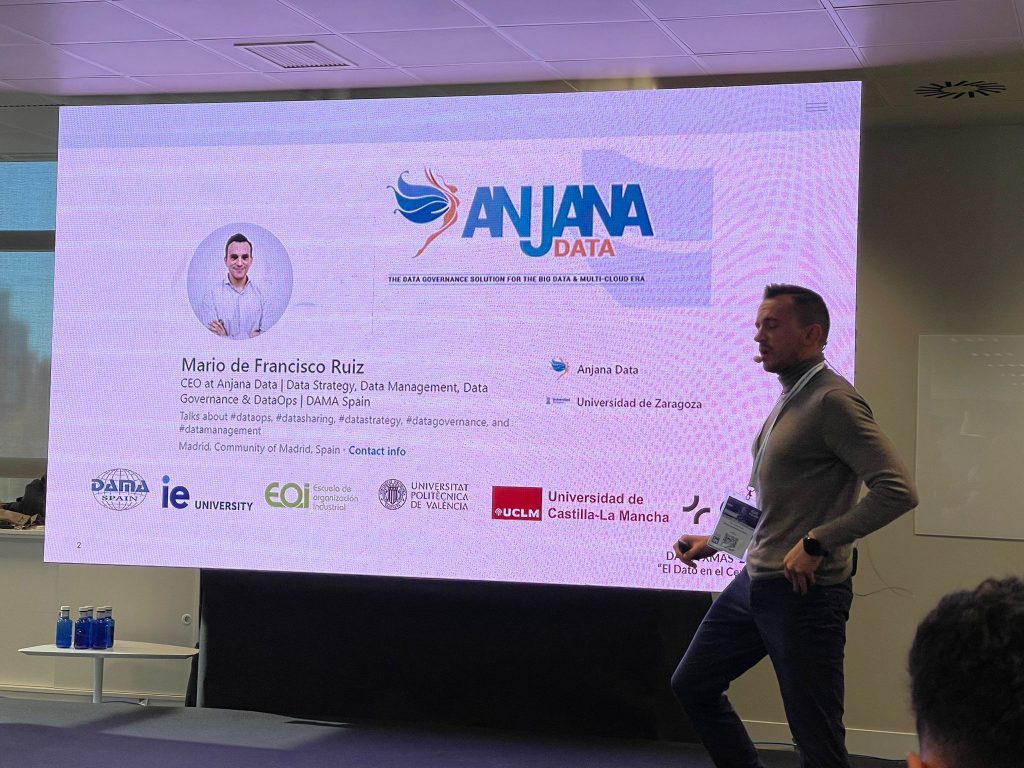
Last week, the traditional event was held. X-MAS Madrid by the Dama España association. An event that brought together a large number of professionals from the data sector to highlight needs, challenges and solutions within the world of management and the data governance. In addition, the event was also used to review the best moments of 2023 in terms of learning, debates, training and tips from the year; a way to gain momentum for the coming year and identify new needs and highlight their value.
Mario de Francisco Ruiz, Chief Executive Officer of Anjana Data, He gave a presentation on the four strategies for implementing a Data Governance model, discussing offensive and defensive strategies with a reactive and proactive approach. It was undoubtedly an original talk, as it took the board game Catan as its starting point. The CEO of Anjana Data used this example to differentiate the key points of strategy and operationalisation in terms of data governance in organisations.
During his presentation, Mario also emphasised the importance of setting up a tailor-made suit for each organisation in terms of its governance model, but without forgetting the three common elements: data governance must be sustainable, absorbable y measurable. This means that data governance must be something that lasts throughout the organisation's lifetime, it must also be integrated at all levels within the company, and it must be measured to identify whether we are really doing it well.
In addition, there are patterns that help us define which of the four types of strategy we should choose: business and strategy motivators, operating model and governing bodies, policies and procedures, change management and communication plan. Below, we have attached the video with Mario de Francisco Ruiz's full presentation at the event so that you can discover how these patterns affect the choice of the four types of strategies for the operationalisation of a data governance model that can be implemented in organisations.